



A clear comparison of bongs, hand pipes, and vaporizers to help you pick the best dry herb device for your lifestyle
Bongs, hand pipes, and Vaporizers are the three most common dry herb devices, and each works in a fundamentally different way. A bong filters smoke through water for a cooler hit. A hand pipe delivers unfiltered smoke in the most portable package. A vaporizer heats herb below the combustion point to produce vapor instead of smoke. The right choice depends on where you use, how much maintenance you want to do, and what kind of experience you prefer.
How Does Each Device Work?
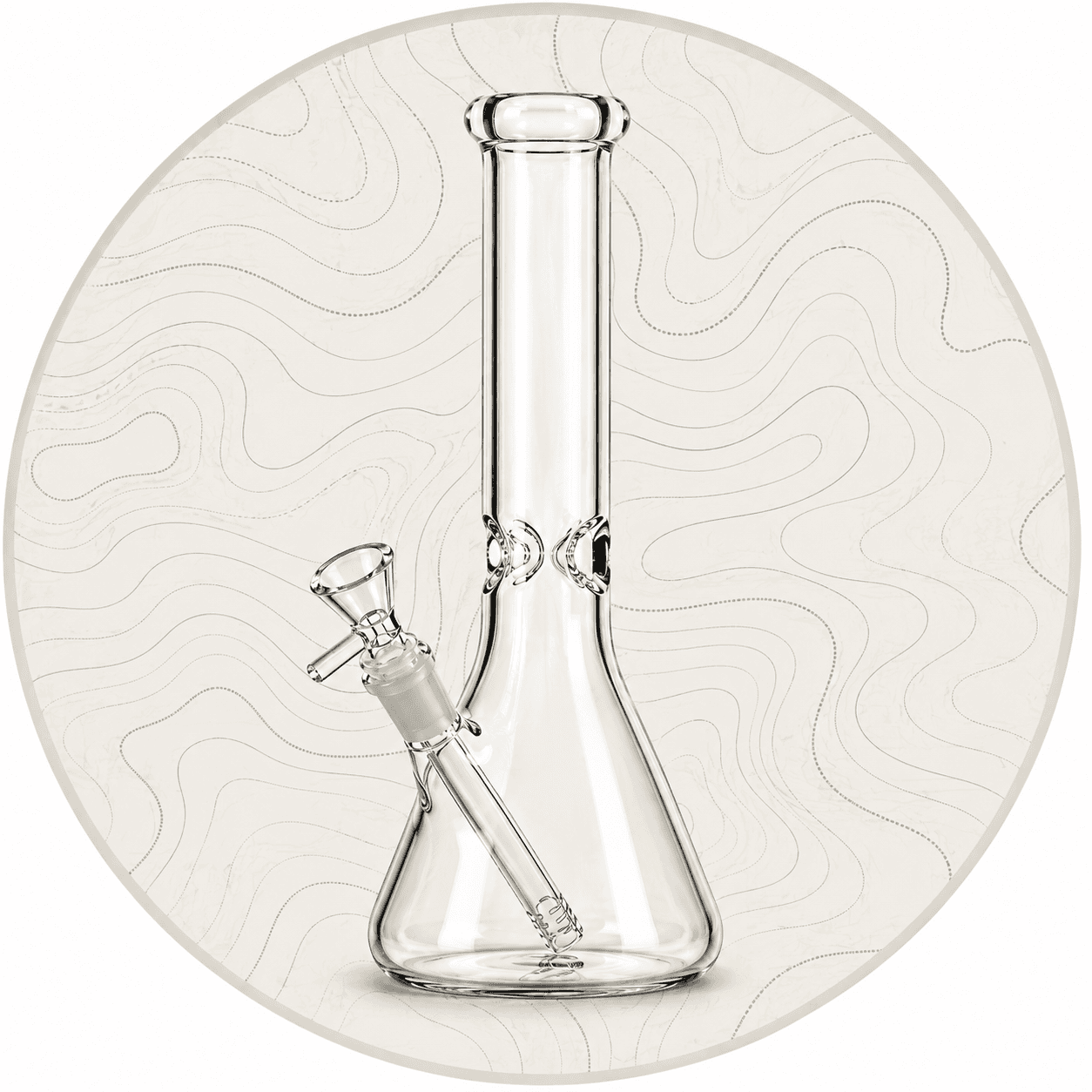
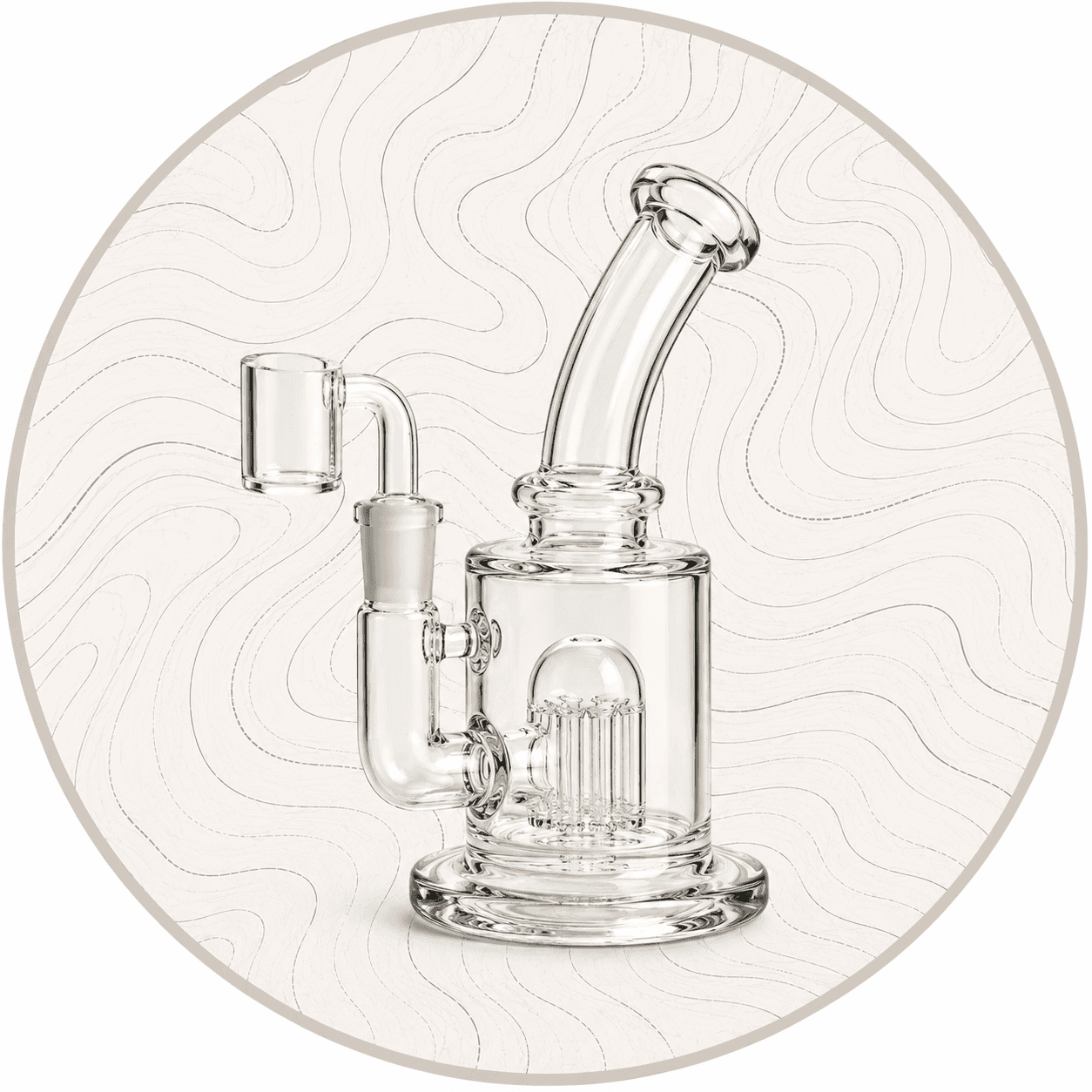
A bong is a water pipe. You fill the base with water, and smoke from the bowl passes through that water before you inhale it. The water cools the smoke through convective heat transfer, and percolators built into the body break the smoke into tiny bubbles so more of it contacts the water. This process reduces the temperature of the smoke before it reaches your mouth. Combustion in a bong occurs at temperatures exceeding 600°C (1112°F), which is the same as any flame-lit method. [1]
- A bong uses water as a cooling medium and relies on flame-based combustion at 600°C+
- A hand pipe has no water and no power requirement — flame and herb are all you need
- A vaporizer heats below combustion temperature to produce vapor instead of smoke
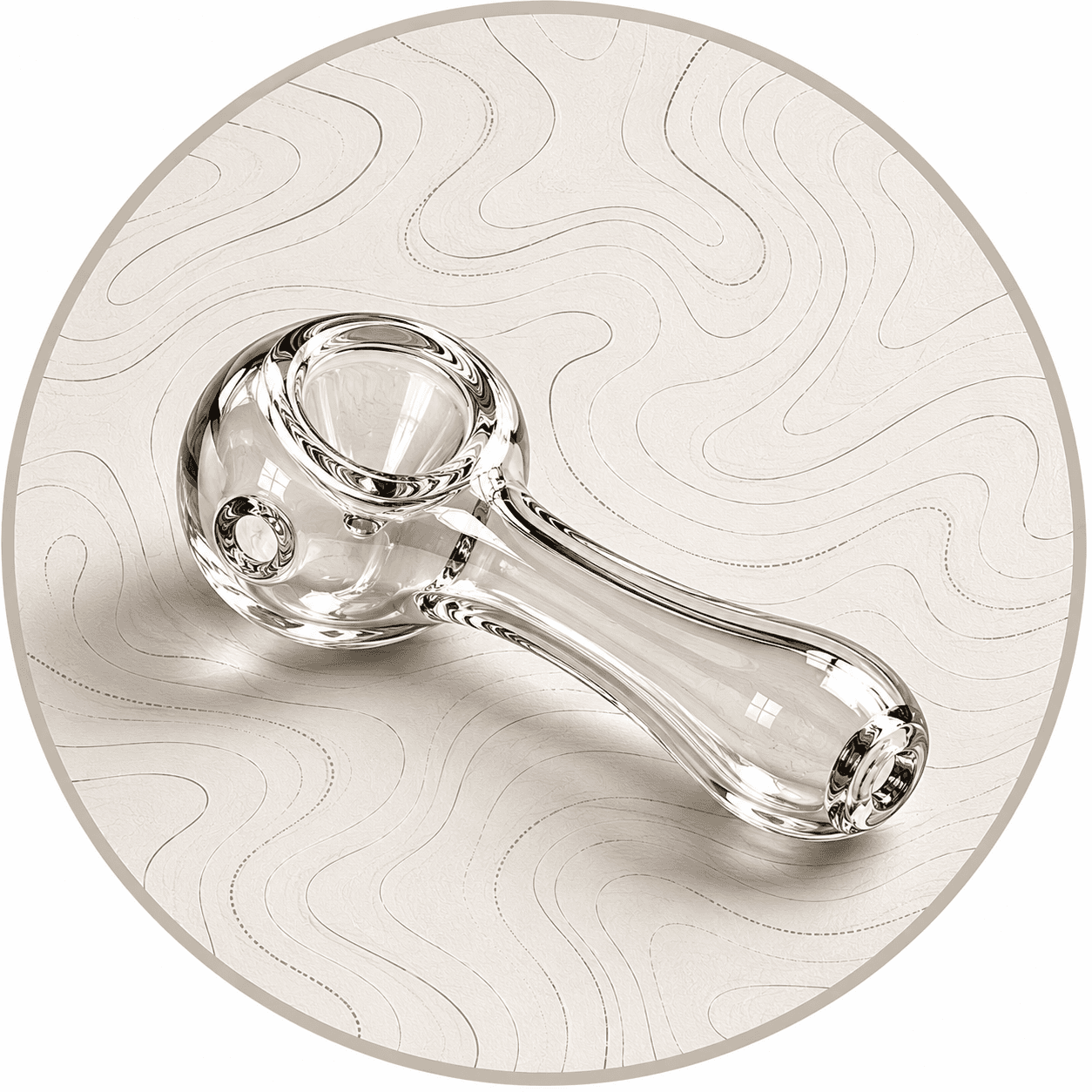
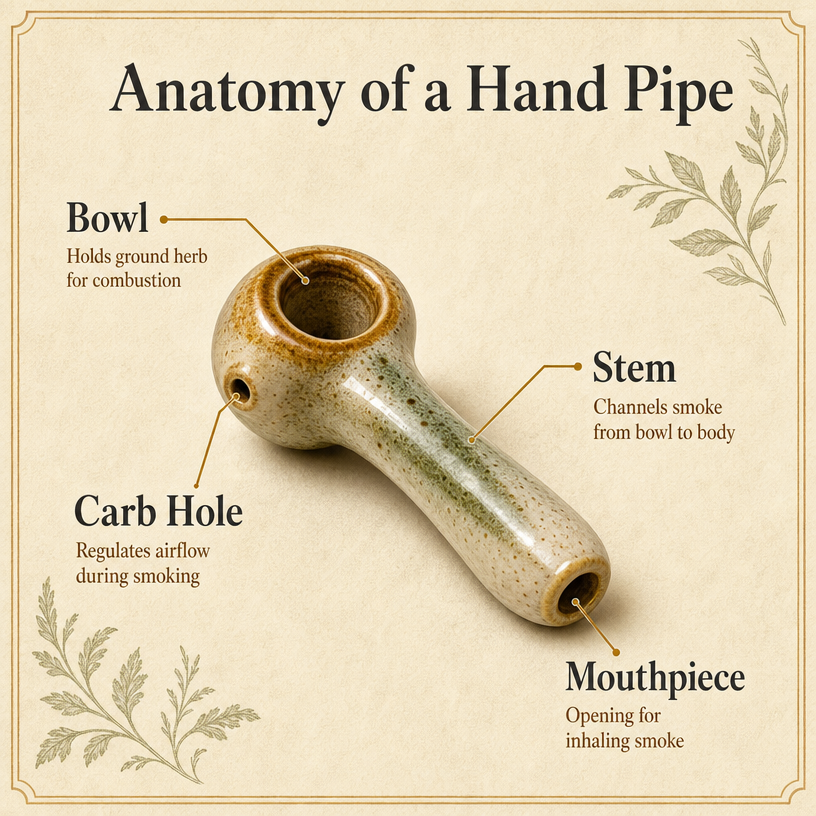
A hand pipe is the most straightforward smoking device. It has three core parts: a bowl where you pack ground herb, a stem that channels smoke from the bowl to your mouth, and a mouthpiece you inhale from. Most Hand Pipes also have a small carb hole on the side that you cover and uncover to control airflow. When you light the herb in the bowl and cover the carb, you draw smoke through the stem. Releasing the carb lets fresh air in to clear the pipe. [3]
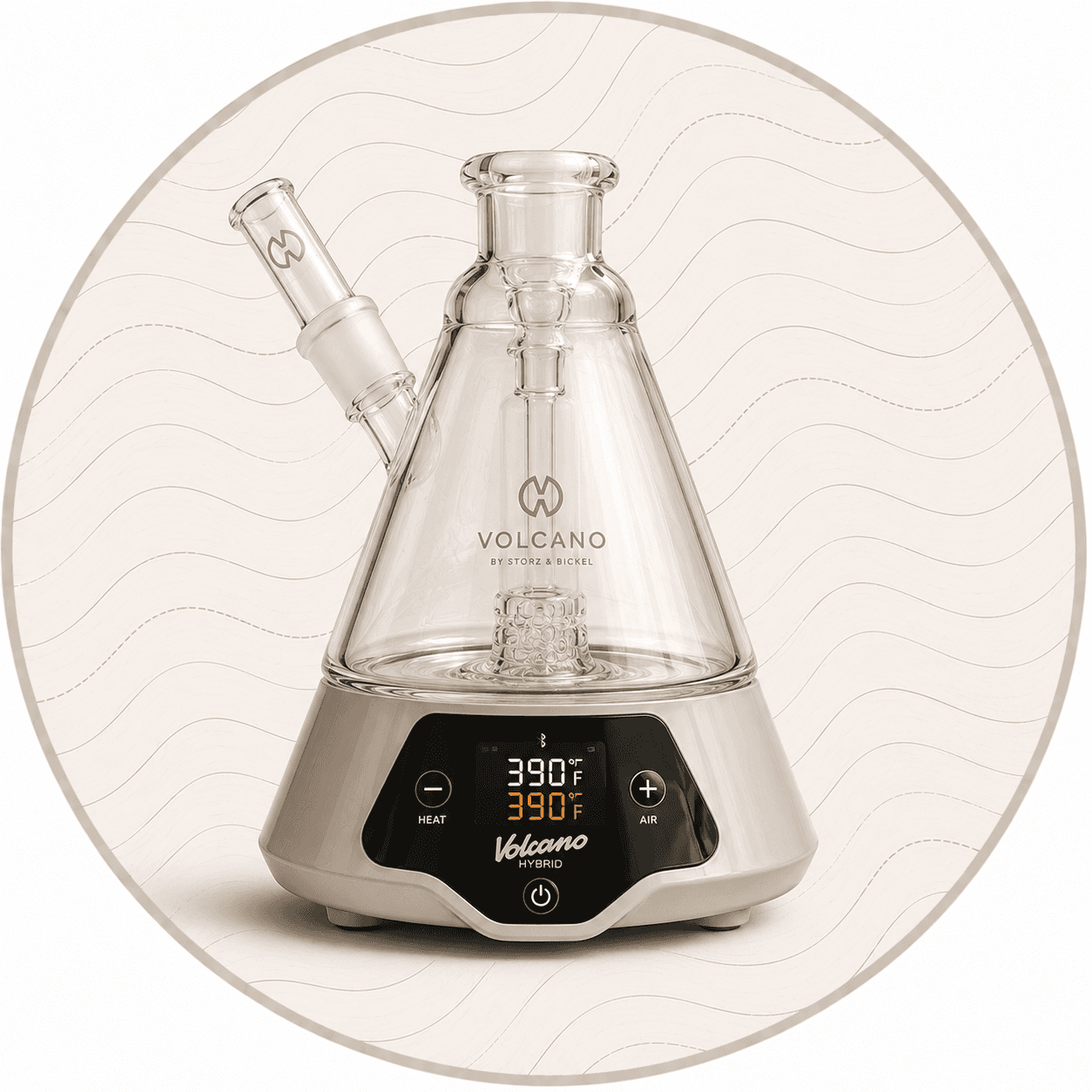
A vaporizer takes a different approach entirely. Instead of burning the herb, it heats it to a temperature high enough to release the compounds you want but below the point where combustion happens. This produces vapor rather than smoke. There are two main heating methods: conduction transfers heat through direct contact between the herb and the heating chamber wall, while convection passes hot air over the herb for more even extraction. [4]
The differences in how these devices work lead to real differences in size, maintenance, and day-to-day use.
What Are the Parts of a Hand Pipe?
Understanding the anatomy of a hand pipe helps you use it properly and get the most out of every session. The basic design has remained largely unchanged for good reason — it works. [3]
- Bowl — holds the ground herb and supports combustion
- Stem — channels smoke from the bowl to the mouthpiece
- Mouthpiece — the inhalation opening at the end of the stem
- Carb hole — regulates airflow during the smoking session
The bowl is where you place your ground herb. It sits at the top of the pipe and holds the amount you load. The size of the bowl determines how much herb you can pack per session.
The stem is the channel running from the bowl down to the body of the pipe. Smoke travels through this channel after the herb is lit. The length and shape of the stem influence how far the smoke cools before you inhale it.
The mouthpiece is the opening at the end of the stem where you put your lips. Its size and shape affect how comfortable the pipe is to use over time.
The carb hole is a small opening on the side of the pipe near the bowl. You cover it while drawing smoke and release it to let fresh air flush the pipe clear. Not all pipes have a visible carb — some Sherlock-style pipes and chillums rely on a different airflow pattern — but most do.
These four parts work together in a simple sequence: pack the bowl, light the herb, cover the carb, draw smoke through the stem, then release the carb to clear any remaining vapor.
Read What Smoking Accessories Do Beginners Need? for more detail.
Read What Is a Bong and How Does It Work? for more detail.
Read What Are Hand Pipes and Bubblers, and How Do They Differ? for more detail.
How Easy Is Each Device to Use and Carry?
Portability and ease of use are where these three devices diverge most noticeably. If you need something you can grab and go, the differences matter.
- Hand pipes require no water, no power, and no warm-up — just pack and go
- Vaporizers need a charged battery, loaded chamber, and temperature setting before use
- Bongs require water before every session and are fragile due to glass construction
A hand pipe is the simplest of the three. There is no water to fill, no battery to charge, and no setup required. You pack the bowl and you are ready. The small size makes it easy to slip into a bag or jacket pocket. Hand pipes work anywhere you can strike a flame, which makes them the most flexible option for on-the-go use. [3]
A vaporizer takes more thought before you use it. Most models require you to grind your herb, load the heating chamber, set your preferred temperature, and wait for the device to reach that temperature before inhaling. Battery-powered models need to be charged. Some vaporizers have a short warm-up time, while others are ready within seconds. Once you learn the routine, it becomes quick, but the learning curve is real. [4]
A bong is the least portable of the three. You need water in the base before you can use it, and the size and fragility of most bongs make them better suited for home use. Smaller beaker-style bongs can be packed into padded cases, but you still need to carry water and clean up after each session. [1]
For travel and quick errands, a hand pipe wins on convenience. For longer trips where you want a specific experience, a compact vaporizer is a strong option. For home use where you want the smoothest hit possible, a bong is worth the extra setup.
Browse Straight Tube Bongs to explore related options.
How Much Maintenance Does Each Device Require?
Maintenance affects how often you use your device and how much time you spend caring for it versus actually using it. Here is what each option demands.
- Hand pipes need weekly cleaning with alcohol and salt to prevent resin buildup
- Bongs require water changes after every session and weekly deep cleaning to prevent bacteria and flavor degradation
- Vaporizers need regular chamber wipes and less frequent deep cleaning of the airway and heating element
Hand pipes are the lowest maintenance. After each session, you can knock out the ash and give the interior a quick wipe. Once a week, a deeper clean with rubbing alcohol and salt clears out buildup that affects flavor. Because the interior is narrow and hard to scrub, resin can accumulate over time, but it builds up slowly if you stay on top of it. [3]
Bongs require more attention. The water in the base should be changed after every session — leaving stagnant water in a bong creates an environment where bacteria can grow, and a 2017 case study documented necrotizing pneumonia linked to contaminated bong water. Beyond water changes, the interior surfaces collect resin and particulate that needs to be cleaned out regularly. Weekly deep cleaning with appropriate solvents keeps the bong functioning properly and keeps the flavor fresh. [6]
Vaporizers have the most variable maintenance needs. The loading chamber and airway can accumulate buildup from the herb, which affects airflow and flavor over time. Wiping the chamber between loads keeps it clean in the short term. Deep cleaning the heating element and airway is needed less frequently than with a bong, but the cleaning process requires more precision since many vaporizers have electronic components you need to protect from moisture. [4]
All three devices perform better and last longer with consistent maintenance. If you want something you can use and quickly put away, a hand pipe is the easiest to maintain. If you do not mind a cleaning routine, a bong or vaporizer will reward the extra effort.
How Do Bongs, Pipes, and Vaporizers Compare Side by Side?
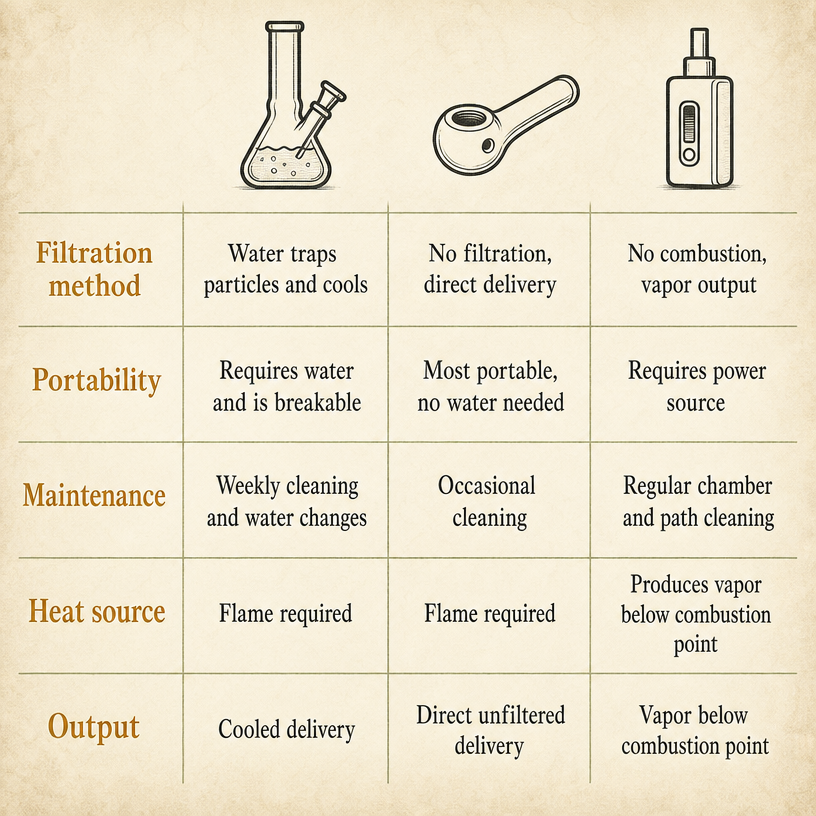
Here is a direct comparison of the key features that matter most when choosing between these three device types.
- Bongs offer water-cooled hits but demand the most maintenance and are the least portable
- Hand pipes are the most portable and lowest maintenance but deliver unfiltered, flame-burned smoke
- Vaporizers produce the least odor and no combustion, but require power and have a learning curve
| Feature | Bong | Hand Pipe | Vaporizer |
|---|---|---|---|
| Filtration / Cooling | Water cools and filters smoke | No filtration or cooling | No smoke — produces vapor |
| Harshness | Cooler hit; still smoke | Harsher unfiltered smoke | Smoothest, vapor-based hit |
| Maintenance | Water changes after every session; weekly deep clean | Weekly alcohol and salt clean | Chamber wipes; less frequent deep clean |
| Portability | Home use; requires water and careful packing | Most portable; fits in a pocket | Compact models travel well; needs charged battery |
| Heat Source | Flame (lighter or match) | Flame (lighter or match) | Built-in battery or external power |
| Odor | Strongest and most persistent | Moderate; dissipates quickly | Least persistent |
Which Device Should I Buy?
The best device for you depends on your priorities and how you plan to use it. Here is a breakdown by the most common user profiles.
- Beginners should start with a hand pipe for its simplicity and zero-setup requirement
- Frequent travelers should look for compact vaporizers that fit in bags and produce minimal odor
- Home users who want maximum cooling should consider a bong with a percolator design
- Maintenance-conscious users should choose hand pipes for their easy cleaning routine
If you are a beginner looking for the simplest possible start, a hand pipe is the right choice. There is no water to manage, no battery to charge, and no temperature dial to figure out. You load it, light it, and draw. It teaches you the fundamentals of dry herb use without any extra steps. [3]
If portability is your top priority and you do not mind a small learning curve, a compact vaporizer is worth considering. Once you get used to loading and temperature settings, you get a consistent experience that produces minimal odor and requires no flame source. [4]
If you use at home and want the smoothest possible hit, a bong is the answer. Water cooling makes a noticeable difference in how the inhale feels, and percolators in higher-end bongs add another layer of diffusion. [1]
If you want the lowest maintenance and do not mind unfiltered smoke, a hand pipe again wins. The simplicity of use and cleaning routine is hard to beat.
If you want a balance of portability and performance, look for compact vaporizers or small beaker-style bongs like the <a href="https://www.treehouse.lifestyle/product/mini-but-mighty-beaker-glass-water-pipe-4-75-clear">Mini, But Mighty Beaker Glass Water Pipe – 4.75\" / Clear</a>. These give you the cooling and filtration advantages of a bong in a size that is easier to store and move.
If you want the cleanest possible experience with no combustion involved, a vaporizer is the only option among these three that heats below the combustion threshold. [4]
Regardless of which device you choose, free shipping on orders $150+ is available at Treehouse Lifestyle, so stocking up on accessories and consumables at the same time makes sense.
See Mini, But Mighty Beaker Glass Water Pipe – 4.75" / Clear as one current product example.
What Are Common Questions About Smoking Accessories?
Is a vaporizer better for your lungs than a bong or pipe?
Research published in peer-reviewed literature indicates that vaporizer use can reduce exposure to carbon monoxide, chronic respiratory symptoms, and several toxins compared to smoking. Water filtration in a bong cools smoke but does not eliminate the byproducts of combustion. [7]
What is the easiest device for a beginner to use?
A hand pipe is generally the easiest for beginners. It requires no water, no power source, and no setup — just pack the bowl, light it, and inhale. Vaporizers have a learning curve due to temperature settings and loading procedures, while bongs require water to be added before each session. [3]
Can I travel with a bong, pipe, or vaporizer?
Hand pipes are the most travel-friendly because they are small, lightweight, and do not require water or electricity. Compact vaporizers also travel well and fit in pockets or bags. Bongs are the least portable due to their size, water requirement, and fragility. [3]
How often should I clean my device?
Hand pipes benefit from weekly cleaning to prevent buildup that affects flavor. Bongs should be cleaned at least weekly, and the water should be changed after every session to prevent bacterial growth. Vaporizers require less frequent deep cleaning but the loading chamber and airway should be cleared regularly. [6]
Which device has the strongest smell?
Bongs tend to retain the strongest and most persistent odor because of the water catching particulate matter and the larger chamber. Hand pipes have a moderate smell that dissipates relatively quickly. Vaporizers produce the least odor because they operate at lower temperatures and do not burn the herb. [4]
Which Dry Herb Device Is Best for Your Situation?
Bongs, hand pipes, and vaporizers each have a clear role. Bongs deliver water-cooled hits in a home setting where portability is not a priority. Hand pipes offer the simplest, most portable experience with minimal maintenance. Vaporizers provide a combustion-free alternative that produces less odor. [7]
The best device is the one that fits how and where you actually use it. A hand pipe wins for travel and quick sessions. A vaporizer wins for odor sensitivity. A bong wins for pure hit quality at home. Evaluate your priorities, start with the simplest option that meets them, and upgrade when your needs change.
Treehouse Lifestyle carries all three types of devices across the Bongs, Hand Pipes, and Vaporizers categories, so you can explore options at your own pace with free shipping on orders $150+.
Where Does This Smoking Accessory Information Come From?
- Wikipedia: Bong (Water Pipe)
- Grasscity: The Science of Bong Water Filtration
- Encore Collection: What Is a Hand Pipe? Beginner’s Guide to Glass Pipes
- TVape: Conduction vs Convection Vaporizers
- Tools420: Differences in Conduction, Convection and Hybrid Vaporizers
- Healthline: How Does a Bong Work? Benefits, Risks, and Myths
- National Institutes of Health / PubMed: Are vaporizers a lower-risk alternative to smoking cannabis?