
A rolling tray guide starts with the basics: a rolling tray is a flat, raised-edge surface that keeps loose material contained while you grind, roll, or pack. [1] Trays are sold by material (metal, wood, silicone, paper, ceramic, bamboo), by size tier (mini through XL), and by features like lids, foldable formats, and sifter compartments. [1][2] Pick the tray that matches the way you actually roll.
What Is a Rolling Tray and What Does It Do During a Rolling Session?
A rolling tray is a flat prep surface with raised edges that catches loose material while you grind, roll, or pack a hand-rolled roll. [1] Specialist retailers describe rolling trays as providing a flat, raised-edge workspace that keeps material contained during grinding, rolling, and packing, with higher-edge and larger formats aimed at full prep setups and travel-friendly smaller formats designed for portability. [1] The tray itself is a prep surface, not a smoking surface — its job is to organize the rolling session before it starts and to make cleanup easier once it ends.
In practice, three concrete jobs happen on a rolling tray. The tray catches the small bits of material that fall out of a grinder or out of a paper as you load it, the tray holds your papers, cones, tips, and grinder in one organized spot, and the tray gives you a defined workspace so the rest of the table stays clean. [1] Without a tray, those three jobs still need to happen — they just happen on a table, a magazine, or a hand, which usually means more mess and more lost material.
It helps to think of a rolling tray as the foundation of the rolling-accessory cluster. The papers, cones, tips, grinder, and any rolling tool all sit on the tray during a session, and the right size tray is the one that holds every other piece without anything hanging off the edge. [1] For a related read on how a first smoking piece is usually picked, the What Is the Best Smoking Piece for a Beginner? beginner guide walks through the same idea of choosing gear by the way you actually use it rather than by the artwork on the lid.
- Catches loose material — raised edges keep ground material from sliding off the surface and onto the table or floor. [1]
- Holds every prep tool in one spot — papers, cones, tips, and a grinder all sit on the same flat surface during a session. [1]
- Defines a workspace — the tray turns a kitchen table, a desk, or a lap into a clear prep zone so the rest of the surface stays clean. [1]
- Speeds cleanup at the end — material sits on the tray rather than scattered across the table, so a quick brush or wipe clears the session. [1]
- Adds portability for travel sessions — foldable, lidded, and mini formats turn the tray into something that travels in a bag without spilling. [1][2]
What Are the Standard Rolling Tray Sizes and Which One Fits Your Setup?
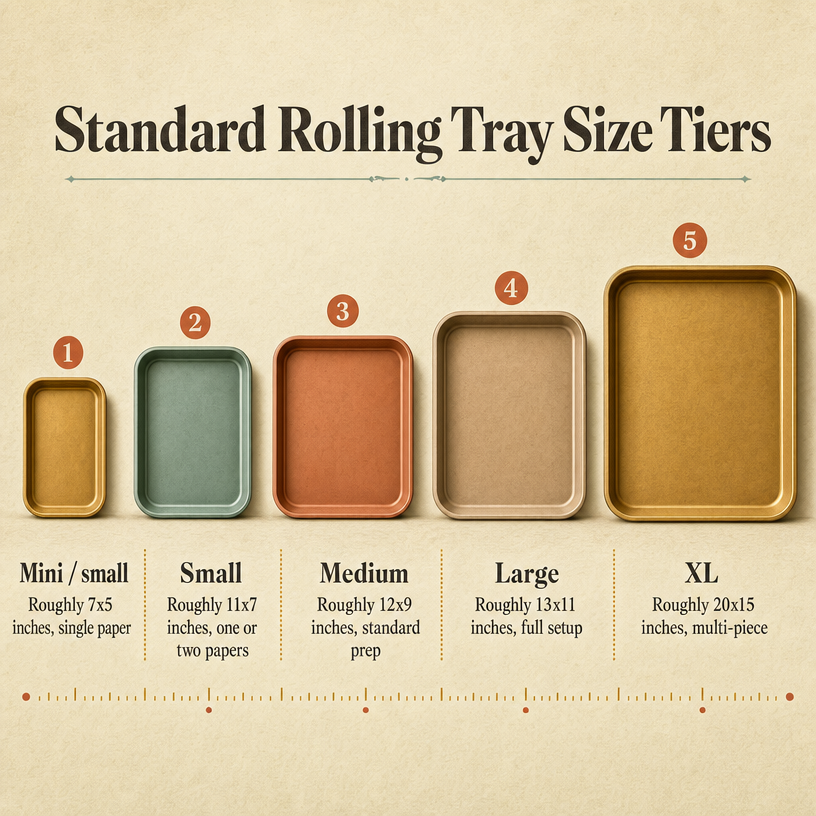
Rolling trays are typically sold by named size tier rather than by a single dimension, and the named tiers match real measurements across major brands. Industry-standard sizes observed across major rolling-tray brands include roughly 7"x5" (mini or small), 11"x7" (small), 12"x9" (medium), 13"x11" (large), and 20"x15" (XL). [2] Those five tiers cover everything from a single-paper quick roll on the road up to a full multi-piece prep session on a counter.
Mini and small trays — roughly 7"x5" and 11"x7" — fit one or two papers and a grinder. Medium — roughly 12"x9" — is the standard prep size and fits a typical rolling session with papers, tips, and a grinder all on the surface at once. Large — roughly 13"x11" — adds room for multiple papers, a grinder, and a packing tool without anything hanging off the edge. [2] XL — roughly 20"x15" — is the multi-piece format and is large enough to spread out cones, tips, papers, and a grinder on the same surface for a longer prep session.
The right size depends on the rolling setup you actually run. A single cone or single paper on a desk needs much less surface than a session that involves several papers, a grinder, and a packing tool, and the tier you pick should match the way you roll rather than the largest size you can fit on a shelf. [2] For a broader look at how all the pieces of the rolling cluster fit together, the What Rolling Accessories Do I Need and How Do I Choose the Right Ones? guide covers papers, cones, tips, grinders, and trays in one place, and the What Size Dab Rig Should You Choose? size article applies similar size-matching logic to a different piece of glass gear.
One practical note: the size tier tells you the surface, not the edge height. Higher edges mean more material can pile up on the tray before it spills, while lower edges make the tray easier to brush off into a container. [1] The size tier and the edge height are independent choices, so it is worth checking both before you commit to a tray.
- Mini / small — roughly 7"x5" inches, fits a single paper and a grinder for a quick roll on the go. [2]
- Small — roughly 11"x7" inches, fits one or two papers and a grinder for a compact prep session. [2]
- Medium — roughly 12"x9" inches, the standard prep size for a typical rolling session with papers, tips, and a grinder. [2]
- Large — roughly 13"x11" inches, fits a full setup with multiple papers, a grinder, and a packing tool. [2]
- XL — roughly 20"x15" inches, fits a multi-piece session with cones, tips, papers, and a grinder spread out at once. [2]
How Do Metal, Wood, Silicone, Paper, Ceramic, and Bamboo Rolling Trays Compare?
Rolling trays are commercially catalogued by material type, and the major categories are metal (including aluminium), wood, silicone, paper and plant-based, ceramic, and bamboo. [1] Each material supports a different kind of edge, finish, and cleanup approach, so the material you pick is really a cleanup and look decision as much as a durability decision. Major distributors group these materials under a Material filter alongside Product Type, Cleaning Method, Portability, and Length and Height, which makes it easy to compare trays across categories without leaving the category page. [1]
Metal trays, including aluminium, are the most common format in the category. They support tall, rigid edges, smooth wipeable surfaces, and a wide range of printed artwork. [1] Wood trays trade the wipeable surface for a more natural look and tend to feature sealed edges and a heavier feel. Silicone trays are flexible and collapsible, with a soft surface that bends rather than cracks. [1] Paper and plant-based trays are aimed at single-use or limited-lifetime use cases, while ceramic trays lean toward a heavier, decorative, easy-to-wipe finish. Bamboo trays sit alongside wood as a natural-material option with a distinctive grain.
One related subcategory worth flagging is the silicone mat. Major distributors catalogue rolling trays, rolling tray lids, and silicone mats as three related but separate subcategories. [1] A silicone mat is a flexible prep surface that sits alongside a rigid tray rather than replacing one, and the distinction matters when you are shopping for a primary prep surface rather than a flexible accessory. [1]
If you want to browse the material range in one place, the Rolling Trays subcategory collects the trays available at Treehouse, and the What Are Hemp, Rice, and Wood Pulp Rolling Papers Made Of? guide to rolling-paper materials covers a similar material-comparison framework for the paper side of the rolling cluster.
- Metal — including aluminium, the most common format; supports tall rigid edges, wipeable surfaces, and a wide range of printed artwork. [1]
- Wood — natural look, sealed edges, heavier feel; trades the wipeable metal surface for a more traditional finish. [1]
- Silicone — flexible and often collapsible, with a soft surface that bends rather than cracks; well suited to foldable and travel formats. [1]
- Paper and plant-based — single-use or limited-lifetime formats aimed at buyers who want a disposable or compostable tray. [1]
- Ceramic — heavier decorative format with an easy-to-wipe finish, more often chosen for look and feel than for travel. [1]
- Bamboo — natural-material option that sits alongside wood with a distinctive grain and a similar sealed-edge construction. [1]
- Silicone mat (related subcategory) — flexible prep surface that sits alongside a rigid tray rather than replacing one. [1]
| Material | Look, finish, and cleanup |
|---|---|
| Metal (incl. aluminium) | Rigid edges, wipeable surface, wide artwork range; the most common format. |
| Wood | Natural look, sealed edges, heavier feel; less wipeable than metal. |
| Silicone | Flexible and often collapsible; soft surface that bends instead of cracks. |
| Paper or plant-based | Single-use or limited-lifetime; aimed at disposable or compostable use. |
| Ceramic | Heavier, decorative; easy-to-wipe finish, more often chosen for look than travel. |
| Bamboo | Natural-material option with a distinctive grain and sealed-edge construction. |
What Features Should You Look for When Choosing a Rolling Tray?
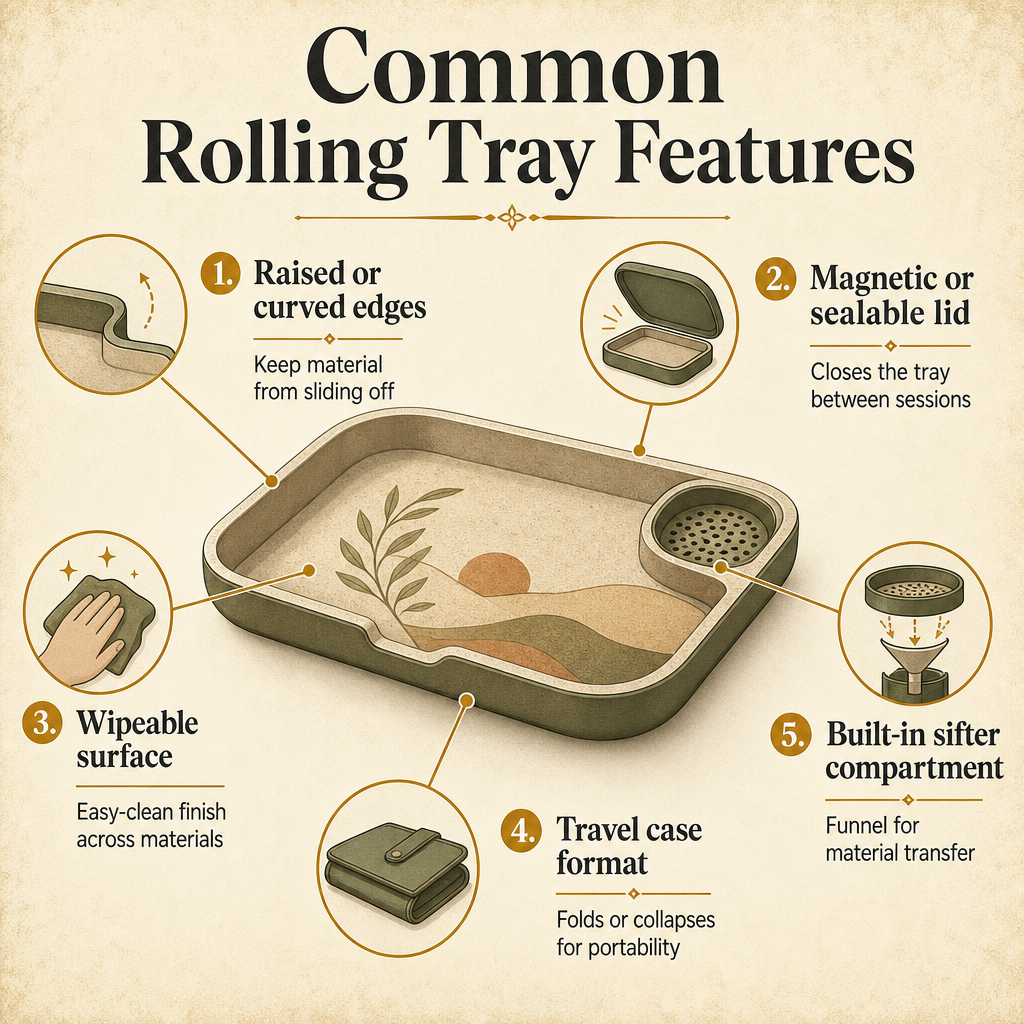
Beyond material and size, rolling-tray manufacturers and major retailers build a recurring set of features into their trays, and the right feature mix depends on whether the tray lives on a desk or travels in a bag. Common rolling tray features offered by manufacturers include raised or curved edges, magnetic or otherwise sealable lids, wipeable or easy-to-clean surfaces, travel cases, foldable or collapsible designs, and built-in funnels or sifter compartments for material transfer. [1][2] Those features are the actual buying criteria — surface artwork is mostly decoration on top of the same set of features.
Raised or curved edges keep material from sliding off the tray during a session. Magnetic or otherwise sealable lids close the tray between sessions, which matters when the tray is stored with material still on it or packed in a bag. [1][2] Wipeable or easy-to-clean surfaces make routine cleanup faster and are most relevant on metal, silicone, and ceramic trays, where a damp cloth is usually enough to clear the surface. Travel cases and foldable or collapsible formats turn the tray into something that packs down into a bag without spilling. [1] Built-in funnels or sifter compartments move material between containers or onto a paper without losing it on the way. [1][2]
It helps to separate the features by where the tray lives. A desk tray needs raised edges and a wipeable surface more than it needs a lid or a foldable format. A travel tray needs a sealable lid and a compact or foldable footprint more than it needs a built-in sifter. [1][2] Once you know where the tray is going to live, the right feature mix usually picks itself. The Rolling rolling category collects the wider range of rolling gear if you want to see how a tray fits alongside papers, cones, tips, and grinders in one browse.
- Raised or curved edges — keep material from sliding off the surface during grinding, loading, and packing. [1]
- Magnetic or sealable lid — closes the tray between sessions, which matters when material is left on the surface or the tray travels in a bag. [1][2]
- Wipeable surface — easy-clean finish on metal, silicone, and ceramic trays where a damp cloth is usually enough. [1]
- Travel case format — foldable or collapsible designs that pack down into a bag without spilling material. [1]
- Built-in sifter compartment — funnel for moving material onto a paper or between containers without losing it on the way. [1][2]
How Does a Rolling Tray Work With Papers, Cones, Tips, and a Grinder?
A rolling tray sits at the center of the rolling-accessory workflow, and the other pieces of the cluster — papers, cones, tips, and a grinder — all live on the tray during a session. [1] The tray’s job is to hold every other piece of the rolling-accessory cluster in one contained spot, and the right size tray depends on whether you are rolling a single cone or running a full prep session with several papers and a grinder. The numbered sequence below walks through the full prep session in order, from laying out the rolling pieces to sealing the finished roll on the same flat surface.
Once you have run through the sequence a few times, the size tier that fits your typical session becomes obvious. A single-paper quick roll fits comfortably on a mini or small tray, while a multi-paper prep session with a grinder and tips needs a medium, large, or XL tray to keep everything on the surface at once. [2] For a curated browse of the grinder side of the cluster, the Grinders subcategory narrows the field to grinders specifically.
- Lay out your papers, cones, and tips on the tray surface so everything you need for the session is in one spot before you start grinding. [1]
- Position the grinder in the center of the tray so any loose material falls onto the surface rather than onto the table. [1]
- Grind onto the tray surface, keeping the grind contained within the raised edges so loose material does not slide off. [1]
- Load the paper or cone from the tray surface, using the grind sitting on the tray as your working supply for the load. [1]
- Pack and seal the roll on the same flat tray surface so the finished roll comes off the tray already sealed and tidy. [1]
- Brush or wipe the tray clean at the end of the session so the surface is ready for the next prep without leftover material sitting on it. [1]
How Do You Clean a Rolling Tray and Can It Be Recycled?
Routine cleanup of a rolling tray is a short numbered sequence, and it is worth doing it in the same order every time so the surface is fully clear before the tray goes back into storage. Specialist retailers describe rolling trays as flat, raised-edge surfaces that keep material contained during grinding, rolling, and packing, which makes the cleanup approach straightforward — brush off loose material, wipe the surface with the right cleaner for the material, and let the tray dry before putting it away. [1]
Recycling is a separate question from routine cleanup, and the answer depends on the material the tray is made from. Plastic-based rolling trays sit within broader U.S. recycling streams where only a fraction of total plastic is recycled nationally, and recyclability depends on local program acceptance for the specific material rather than a universal rule. [3] In practice, that means the right move is to check your local program for the actual material the tray is made from — metal, wood, silicone, paper or plant-based, ceramic, or bamboo — rather than assume the tray is or is not recyclable. [3]
- Brush loose material off the tray back into a container so the surface is clear of grind before you start wiping. [1]
- Wipe the surface with a damp cloth or a cleaner that is appropriate for the tray’s material — metal, silicone, and ceramic usually wipe clean with a damp cloth. [1]
- Wipe again with a dry cloth so the tray surface is dry before you put the tray back into storage. [1]
- Check the actual material of the tray — metal, wood, silicone, paper or plant-based, ceramic, or bamboo — before you decide whether it goes in the recycling. [3]
- Confirm with your local recycling program whether that specific material is accepted, because plastic recyclability in particular depends on local program acceptance rather than a universal rule. [3]
What Other Rolling and Prep Categories Pair With a Rolling Tray?
Rolling trays are part of a wider rolling-accessory cluster, and the major related retail categories sit on the same shelf as trays rather than in a separate aisle. Rolling trays sit alongside rolling papers, pre-rolled cones, filter tips and crutches, grinders, and rolling machines under the broader rolling and prep taxonomy, rather than as a standalone product on their own. [1] Understanding the cluster architecture makes it easier to know what to buy alongside a tray so the setup is ready to use out of the box.
Within the cluster, two subcategories share shelf space with trays specifically. Rolling tray lids are separate covers designed to fit a specific tray, and silicone prep mats are flexible prep surfaces that sit alongside rather than replacing a rigid tray. [1] Both are worth knowing about when you are buying a tray, because a lid turns a desk tray into a storable tray and a silicone mat turns any flat surface into a backup prep zone.
If you want to see how a tray pairs with a specific cone format, the Juicy Terp Infused Squeeze Cones | Maui Wowi | 30pk Display cone listing is one example of the cone side of the cluster that fits alongside a standard rolling setup. Together with papers, tips, a grinder, and the tray itself, that is the full rolling-accessory workflow most buyers end up with after a few sessions.
One more thing worth flagging before you buy: free shipping on orders $150+ makes it practical to pair a tray with papers, cones, tips, and a grinder in the same order, which keeps the full rolling setup ready to use without a second shipment.
- Rolling papers — the standard paper format the rest of the rolling cluster is built around, and the first thing most buyers pair with a tray. [1]
- Pre-rolled cones — pre-formed paper cones that fill and seal quickly and fit naturally on a medium or large tray surface. [1]
- Filter tips and crutches — small paper or glass tips that sit at the mouthpiece end of a roll and hold the cluster together. [1]
- Grinders — used to break material down onto the tray surface before loading, and the main reason a tray needs raised edges in the first place. [1]
- Rolling machines — separate from the manual workflow but sit in the same retail cluster as trays for buyers who want a tool-assisted roll. [1]
- Rolling tray lids and silicone prep mats — the two subcategories that share shelf space with trays specifically and round out the tray side of the cluster. [1]
Frequently Asked Questions
Are rolling trays, rolling tray lids, and silicone mats the same product?
No. Major distributors catalogue rolling trays, rolling tray lids, and silicone mats as three related but separate subcategories. A rolling tray is the flat prep surface itself, a lid is a separate cover designed to fit a specific tray, and a silicone mat is a flexible prep surface that sits alongside rather than replacing a rigid tray.
What is the difference between mini, small, medium, large, and XL rolling trays?
Rolling trays are typically sold by named size tier rather than a single dimension. Verified manufacturer dimensions include roughly 7×5 inches (mini or small), 11×7 inches (small), 12×9 inches (medium), 13×11 inches (large), and 20×15 inches (XL). The right size depends on whether you are rolling a single paper on the go or running a full multi-piece prep session.
What materials are rolling trays made from?
Rolling trays are commercially catalogued by material type. The major categories are metal (including aluminium), wood, silicone, paper and plant-based, ceramic, and bamboo. Each material supports a different kind of edge, finish, and cleanup approach, so the material you pick is really a cleanup and look decision as much as a durability decision.
What features should I look for in a rolling tray?
Recurring features in the category include raised or curved edges to keep material contained, magnetic or otherwise sealable lids to close the tray between sessions, wipeable or easy-to-clean surfaces, travel cases and foldable or collapsible formats, and built-in funnels or sifter compartments for moving material around. The right feature mix depends on whether the tray lives on a desk or travels in a bag.
How does a rolling tray fit into a full rolling setup?
The tray holds every other piece of the rolling cluster in one spot: rolling papers, pre-rolled cones, filter tips or crutches, and a grinder. You lay the papers and tips out, grind onto the tray surface, load the paper or cone, and seal the roll on the same flat surface, which is why size and edge height matter as much as the artwork on the lid.
Are rolling trays recyclable?
Plastic-based rolling trays sit within broader U.S. recycling streams where only a fraction of total plastic is recycled nationally, and recyclability depends on local program acceptance for the specific material. There is no universal rule for rolling trays, so the right move is to check your local program for the actual material the tray is made from.
What Size and Material Rolling Tray Should You Buy Next?
The right rolling tray comes down to three honest questions: how much surface you actually need, what material you prefer, and whether the tray lives on a desk or travels in a bag. [1][2] Once you have answered those three, the size tier and feature mix usually pick themselves, and the material becomes a cleanup and look decision rather than a durability decision. [1]
If you roll a single paper or cone on the go, a mini or small tray in metal, silicone, or paper and plant-based is enough. [2] If you run a typical prep session with papers, tips, and a grinder on a desk, a medium tray in metal is the standard answer. [2] If you spread out a full multi-piece setup with cones, tips, papers, and a grinder at once, a large or XL tray in metal or wood is the right tier, and a sealable lid becomes worth the extra cost. [1][2]
Before you commit, confirm the size tier and the material, and check that the tray’s edge height matches the kind of prep you run — higher edges for grinders that shed a lot of material, lower edges for quick papers and cones where you brush off the surface after each roll. [1] Once the size tier, material, and feature mix are locked in, the tray is just the foundation of the rest of the rolling cluster, and pairing it with the right papers, cones, tips, and grinder in the same order finishes the setup. Free shipping on orders $150+ makes it practical to bundle a tray with the rest of the rolling accessories in one shipment, so the full setup arrives ready to use.
Sources
- Smoke Cartel: Rolling Trays — Herb & Weed Trays
- High Life Goods: Rolling Trays
- U.S. Environmental Protection Agency: How Do I Recycle Common Recyclables